Why Tired Decisions Are Worse Decisions: Investing After a Long Shift
Fatigue narrows judgment and invites impulsive choices. Five habits help you keep investing decisions out of your most tired hours.
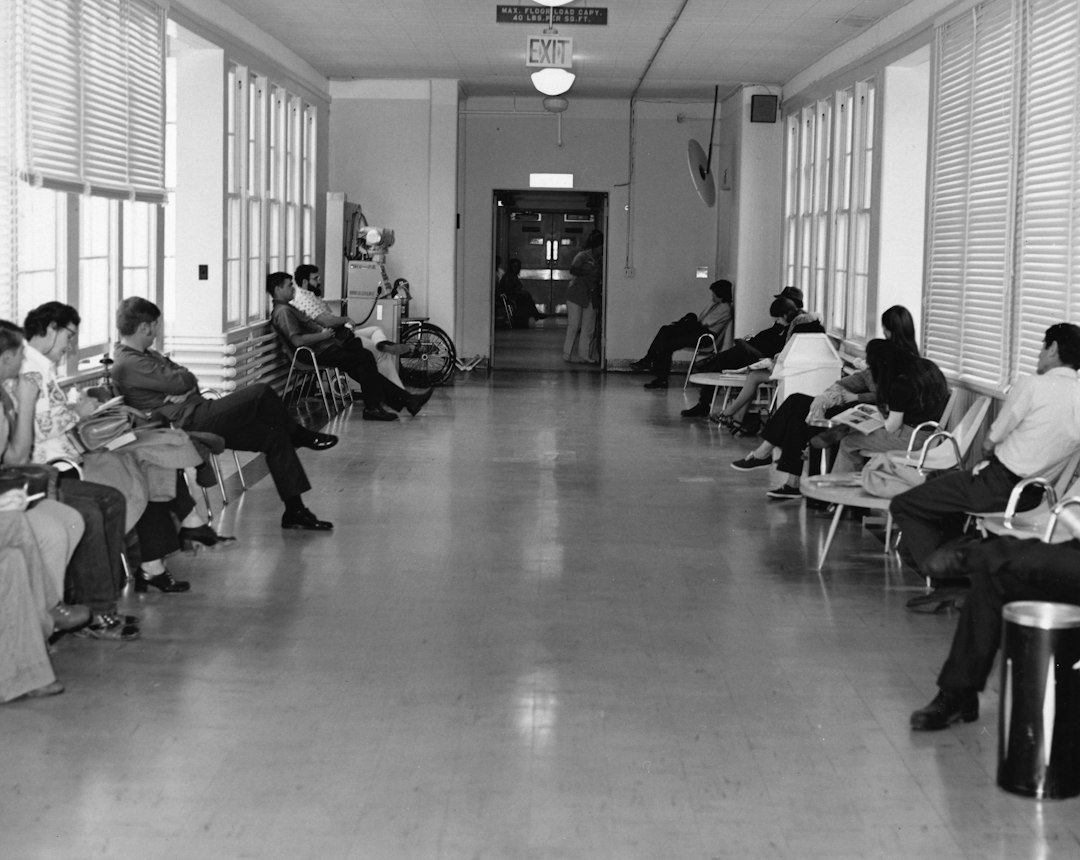
Photo: Navy Medicine / unsplash
Alpha Sentinel is a software platform, not a registered investment adviser. This article is educational, not investment advice. Full disclaimer at the end of this post.
It is hour eleven of a shift that was supposed to be eight, and you are scrolling your brokerage app in the break room, convinced that now is a good time to make a move. Your judgment feels fine. It is not. The reason tired decisions are worse decisions is that fatigue narrows attention, weakens self-control, and makes the quickest option feel like the right one, and investing after a long shift is a setting where that costs the most. The practical answer is to move the decision out of the exhausted hours and into rested ones, using a few simple rules.
Key Takeaways
- Fatigue reduces the quality of judgment and makes impulsive or avoidant choices more likely.
- Tired people are often the least aware of how impaired their thinking has become.
- Rules written when you are rested take the decision out of a tired moment.
- Routine tasks are fine to do tired, while discretionary decisions should wait.
- A short delay before acting costs little and can prevent a regretted choice.
1. Fatigue changes how you decide
Sleep loss and long stretches of demanding work reduce attention, memory, and the ability to weigh competing considerations. Studies of behavior and decision-making broadly describe the same pattern: tired people lean toward shortcuts, favor immediate relief over considered judgment, and tolerate risk in odd ways, sometimes avoiding it entirely and sometimes taking too much of it.
For an investor, this shows up in familiar forms. You might sell something because a headline made you uneasy, buy something because it felt like an opportunity you could not afford to miss, or ignore a decision you should make because thinking about it feels like too much. Each of these is a reaction to your state rather than to your situation.
None of this is a character flaw. It is how human cognition works under load, and recognizing it is the first step toward designing around it.
2. You cannot reliably tell when you are impaired
The troublesome part is that fatigue also hides itself. People who are sleep-deprived often rate their own performance as better than it is, so the feeling of being clear-headed is not good evidence that you are. After a long shift, a call, or a trial day, you may feel focused and decisive when you are simply wired.
This is why "I'll just be careful" is an unreliable defense. Care requires the same mental resources that fatigue depletes. A better approach does not rely on your in-the-moment self-assessment at all. It relies on a rule that applies automatically based on circumstances you can observe, such as the hour, the length of your shift, or whether you have slept.
A rule like "no discretionary financial decisions within a few hours of a long shift or before I have slept" is easy to follow because it does not ask you to evaluate your own condition.
3. Separate routine tasks from real decisions
Not every financial action carries the same risk when you are tired. Routine, reversible tasks are generally fine: confirming that a contribution posted, paying a bill, filing a statement, or writing down a question. These involve little judgment and have low stakes if you make a small mistake.
Discretionary decisions are different. These include buying or selling an investment, changing your overall mix, reacting to market news, and taking on any new commitment. They require weighing trade-offs, which is exactly what tired minds do poorly, and they can be difficult or costly to undo.
Write the two lists down and keep them somewhere visible. When you are tempted to act, check which list the action belongs to. If it is on the second list, the answer is not no forever; it is not yet.
4. Use a waiting period as a tool
A cooling-off period is the simplest defense. Choose a delay, perhaps one night's sleep for ordinary decisions and a longer gap for significant ones, and apply it consistently. If the idea still seems sound after a rested review, you have lost almost nothing by waiting. If it no longer seems sound, you have avoided a mistake.
Markets rarely require a decision at one particular minute from a long-term investor. Urgency is mostly a feeling, and tired people feel it intensely. Asking "what is the cost of waiting until tomorrow?" is a good way to puncture it, since for most long-term choices the honest answer is "very little."
Pair the delay with a written note. Jot down the idea and the reason, then read it the next day with fresh eyes. You will often find the reasoning less convincing than it seemed the night before.
5. Build the rested review into your week
The point of delaying decisions is to give them a proper home. Schedule a regular review at a time when you are rested, whether that is a weekend morning or an evening after a day off, and use it for the decisions you postponed. This gives deferral a purpose and prevents the postponed items from piling up.
In that session, work through your notes in a set order: what happened, whether your reasons for holding still apply, and whether any action is warranted. Keep the standard high. A change should have a stated reason that you could explain to someone else, not merely a feeling.
If a decision involves taxes, legal ownership, or a large share of your net worth, take it to a qualified professional. Working with an advisor and self-directing are both legitimate approaches, and either benefits from rested judgment.
Illustrative example: one long shift
This is a hypothetical illustration, not a record of anyone's results. A physician finishes a long overnight shift and, on the drive home, feels a strong urge to sell a holding after reading a worrying headline.
She recognizes the situation from her own rules: it is after a long shift, the action is discretionary, and she has not slept. She writes one line in her notes app: "Considering selling X because of headline; check reasons after sleep." Then she goes home and sleeps.
That afternoon she reads the note, looks at her original reasons for owning the holding, and sees that the headline does not change them. She does nothing and continues her routine. Had she sold on the drive home, she would have acted on her state rather than her plan. The delay cost her nothing.
Frequently Asked Questions
Is it bad to make investment decisions when you are tired?
It is riskier, because fatigue narrows attention and encourages impulsive or avoidant choices. Routine tasks are usually fine, but discretionary decisions are better made after rest.
How long should I wait before acting on an investment idea?
A night of sleep is a reasonable minimum for ordinary decisions, and a longer gap suits larger ones. The right delay depends on how significant and how reversible the decision is.
Does stress affect investment decisions?
Yes, stress tends to push people toward shortcuts and emotional reactions, much as fatigue does. A written plan and a scheduled review give you a way to respond more deliberately.
What is the best time of day to review my investments?
Choose a time when you are rested and uninterrupted, such as a weekend morning or a day off. The best time is the one that fits your schedule and your clearest thinking.
How The Shield works
On weekdays from 4:00 AM to 8:00 PM ET, The Shield checks the stocks on your watchlist every few minutes, using prices delayed about 15 minutes. When one of them moves into downward momentum below its moving average, it emails you what changed and the price. Alerts are informational, not recommendations, and may be delayed or missed.
If long hours keep catching you at your least clear, start your 7-day pass for The Shield from Alpha Sentinel and let every decision stay yours to make when you are rested. We watch. We alert. You decide.
The ShieldYour watchlist, watched during market hoursStart your 7-day pass$29 today. Your subscription renews automatically at $249/month after the 7-day trial unless canceled before renewal. Cancel in account settings.
FULL DISCLAIMER: Alpha Sentinel is a software platform that provides informational tools, including market scans and position-monitoring outputs. Alpha Sentinel is not a registered investment adviser, broker-dealer, certified public accountant, financial planner, or law firm. Nothing on this page or produced by the platform constitutes investment, tax, legal, or accounting advice; an offer or solicitation to buy or sell any security; or a personalized recommendation of any kind. The platform is not a substitute for the services of qualified professionals, and nothing in this article should be read as a recommendation that any reader manage their portfolio without professional guidance. All investments involve risk, including the risk of total loss of principal. Tax treatment depends on the user's individual circumstances and applicable law; consult a qualified tax professional regarding any tax-related question. The output of any software filtering or monitoring rule is not a prediction of future market behavior, and no software tool can be relied upon to warn users in advance of losses or to prevent losses. Past performance, whether of any security, strategy, or software signal, does not guarantee future results. Alpha Sentinel does not publish or warrant any hit rate, win rate, or similar performance metric, and users should not infer any such metric from the platform's outputs.
Frameworks, examples, schedules, and references to user types in this article are illustrative only and are not representations of typical results. Notification delivery times and service availability depend on third-party systems and may be subject to delays, errors, or failures.
Related Posts
Sequence-of-Returns Risk: Why the Timing of Losses Matters in Retirement
Why the order of returns matters once you start withdrawing, and the six stages for planning around a poor start to retirement.
Oct 13, 2026
Delisting Explained: What Happens to Your Shares
Delisting explained in five stages: why stocks leave an exchange, where shares trade next, and what happens to your ownership and records.
Oct 13, 2026
New Issues and IPOs: Why First-Day Pops Mislead Individual Investors
Why first-day IPO jumps mislead individual investors, how offering prices are set, and what to read and watch before buying a new issue.
Oct 13, 2026